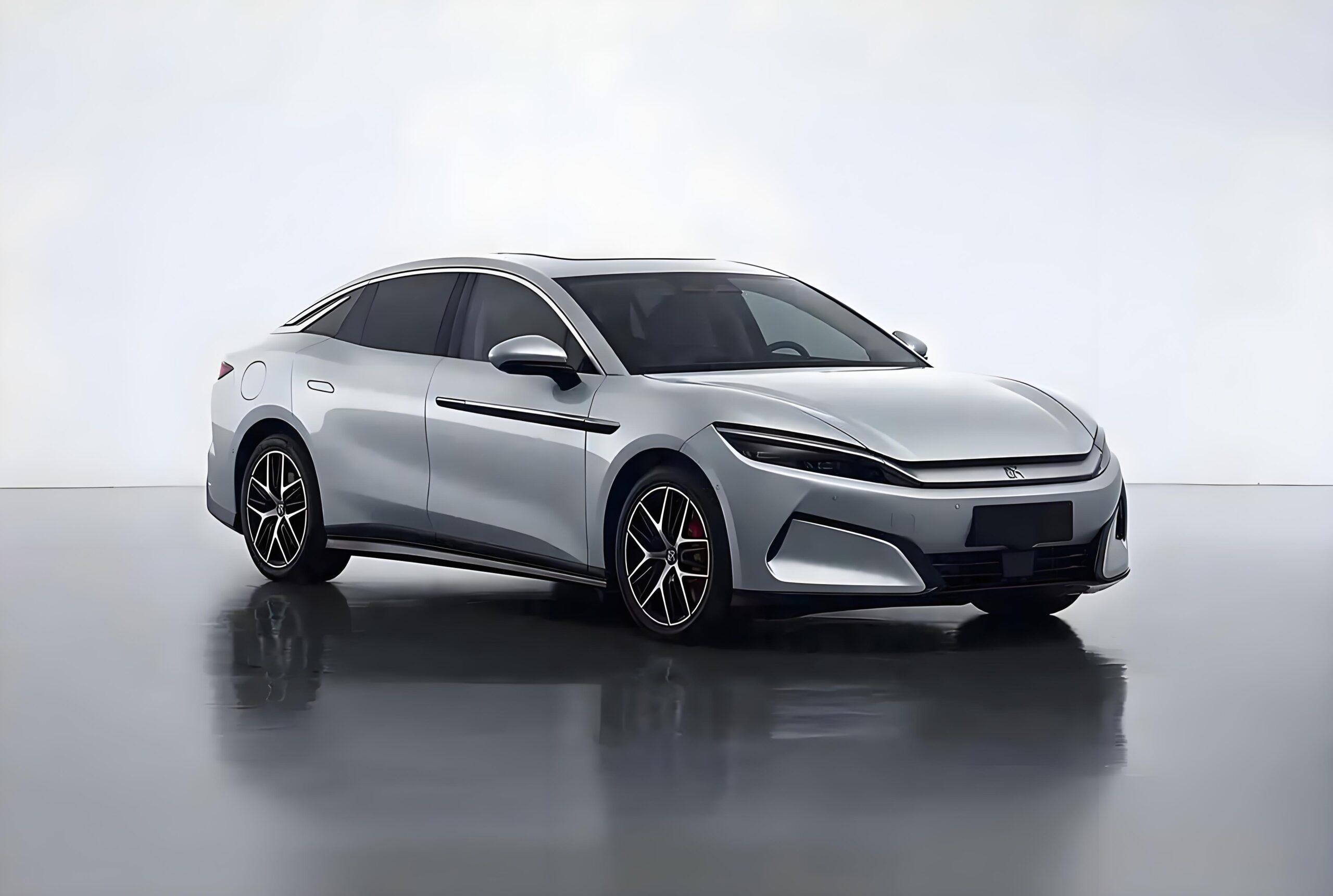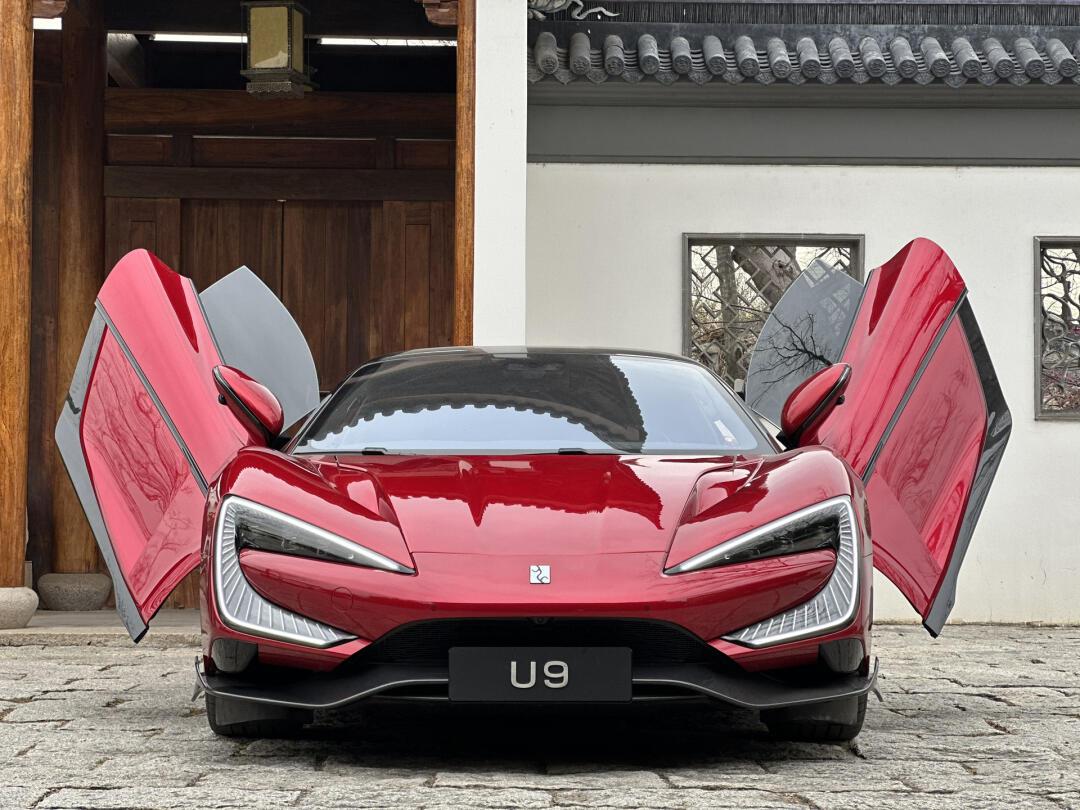
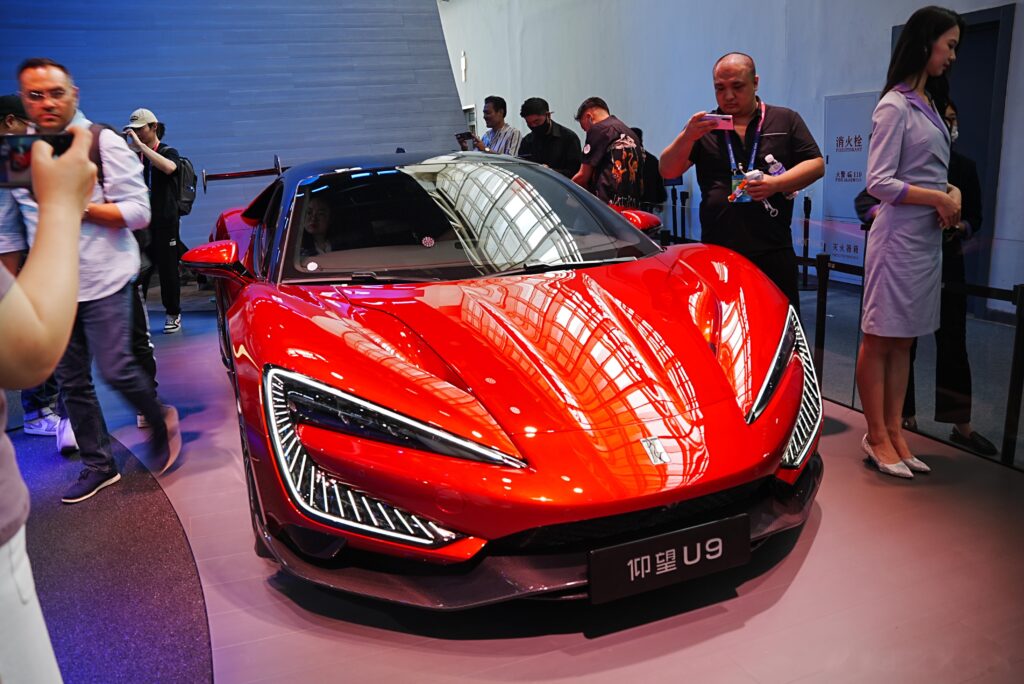
The BYD Yangwang U9 is expensive because it is not designed as a mass-market electric car, but as a technology flagship supercar. Priced at around ¥1.8 million (≈$250,000), the U9 combines cutting-edge electric powertrain technology, extreme performance benchmarks, aerospace-grade materials, and deliberate brand positioning. Rather than competing on price, BYD uses the Yangwang U9 to prove that a Chinese automaker can build a world-class electric supercar that rivals—and in some cases surpasses—established European legends.
Part One: Why the High Price? Core Value Proposition of the BYD Yangwang U9
The Yangwang U9’s price is driven by value creation, not cost-plus pricing. Its core value lies in four key areas:
1. Extreme Technological Barriers
The U9 is the world’s first pure-electric supercar equipped with BYD’s e⁴ four-motor independent drive system.
- Combined output: 1,306 horsepower
- 0–100 km/h: 2.36 seconds
In performance terms, this places the U9 in the same league as:
- Ferrari SF90 (≈¥5 million)
- Porsche 918 Spyder (≈¥8 million)
2. Breakthrough Functional Innovation
The Yunyan-X intelligent suspension system enables features rarely seen in any supercar:
- “Dancing mode”
- On-the-spot U-turns
- Independent wheel control
This shifts the supercar experience beyond track-only performance into real-world, scenario-based usability.
3. Materials and Manufacturing Craftsmanship
- Full carbon-fiber body panels, reducing weight by 150 kg
- Aircraft-grade aluminum alloy frame with 120 meters of laser welding
- High-durability gold paint finish designed to retain luster for five years
These materials and processes cost significantly more than conventional automotive manufacturing.
4. Verified Global Performance Records
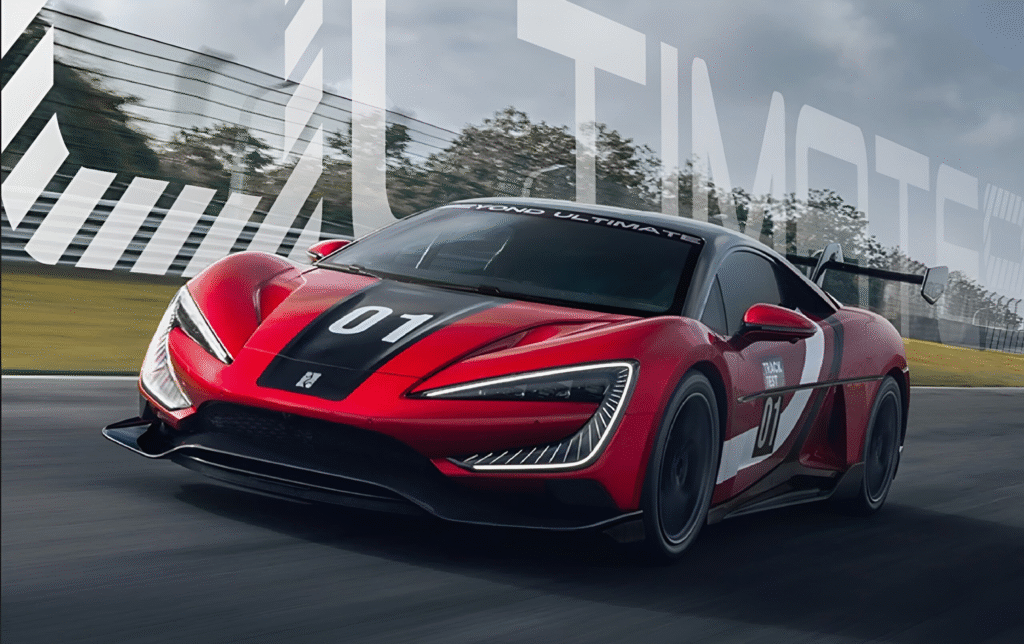
- Top speed: 496.22 km/h (308.7 mph), world record (Sept 2025)
- Nürburgring lap: 6:59.157
These achievements earned the U9 recognition as the world’s fastest pure-electric supercar.
Part Two: Do the Component Costs Justify the Price?
Industry estimates suggest the Yangwang U9’s component and manufacturing cost reaches approximately ¥1.55 million, leaving minimal margin at its ¥1.8 million retail price.
Key cost drivers include:
- ¥3 billion in R&D investment
- 1,200+ hours of wind tunnel testing
- Proprietary systems such as carbon-ceramic brakes and active aerodynamics
Unlike traditional supercar brands, BYD vertically integrates most components, eliminating supplier markups but absorbing high internal development costs.
From a strategic perspective, the U9 is not profit-driven—it is a brand credibility project designed to reset global perceptions of Chinese performance vehicles.
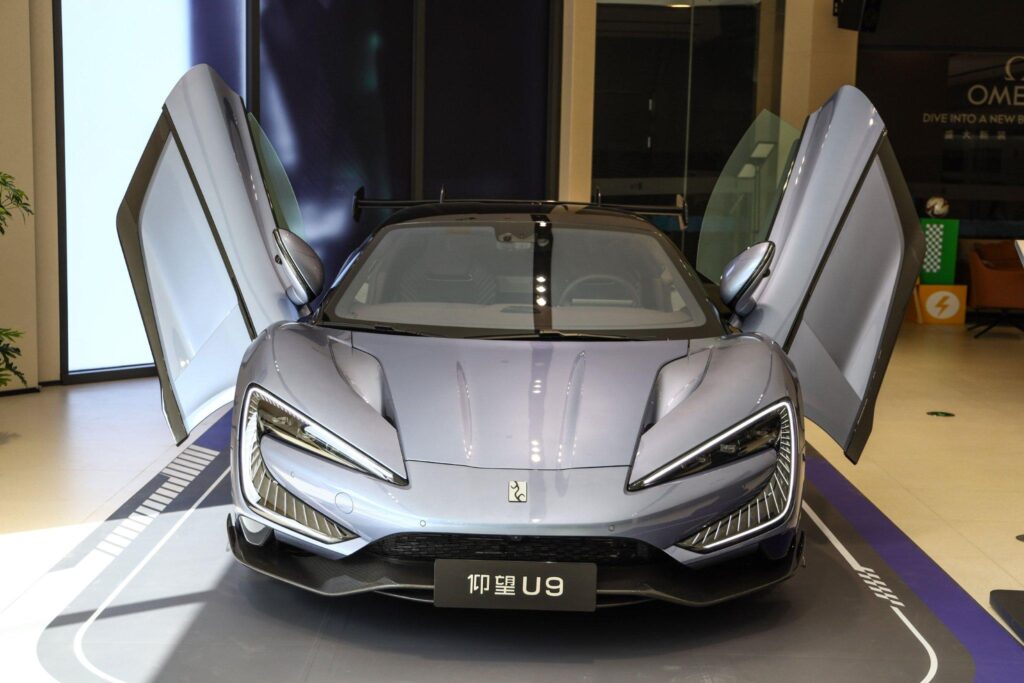
Part Three: How BYD Achieves Premium Supercar Positioning
1. Powertrain Superiority
- Four independent motors enable precise torque vectoring
- Cornering body roll limited to 2.3 degrees, 40% less than Tesla Roadster benchmarks
2. Aerodynamic Excellence
- 12 active and passive aerodynamic elements
- Drag coefficient as low as 0.195 Cd, outperforming the Bugatti Chiron
3. Scenario-Based Innovation
The Cloud Chariot-X system allows real-time suspension and wheel control across complex driving conditions.
Social-media-popular features like “Dancing Mode” reinforce Yangwang’s youthful, tech-forward brand identity.
4. Pricing and Cost Control Strategy
BYD standardizes premium components (such as sapphire buttons) while monetizing customization:
- Carbon fiber wheels priced at ¥130,000
This balances exclusivity, personalization, and cost efficiency.
Part Four: Market Validation and Real-World Outcomes
Performance Recognition
- World top-speed record (496.22 km/h)
- Nürburgring sub-7-minute lap time
Sales Performance
Despite a price increase in October 2025:
- Average monthly orders per dealership in Luoyang remained around 15 units
- Buyers are predominantly high-net-worth individuals and tech-focused enthusiasts
Brand Impact
- Collaboration with Peacekeeper Elite generated 1+ billion social media mentions
- BYD’s stock price rose 12%, pushing market capitalization beyond ¥1 trillion
The Yangwang U9 functions as a halo product, elevating BYD’s entire brand ecosystem.
So, why is the BYD Yangwang U9 so expensive? The answer lies in its role as a technological statement rather than a commercial volume product. Through extreme performance, proprietary electric architectures, innovative suspension systems, and verified global records, the U9 redefines what a Chinese supercar can be. Its premium pricing reflects not just hardware, but confidence—signaling a shift from traditional price competition to long-term value competition. As China’s new-energy industry matures, the Yangwang U9 may represent the blueprint for the next generation of global high-performance electric vehicles.